The Top-Down Fire Method: How to Build and Why It Works
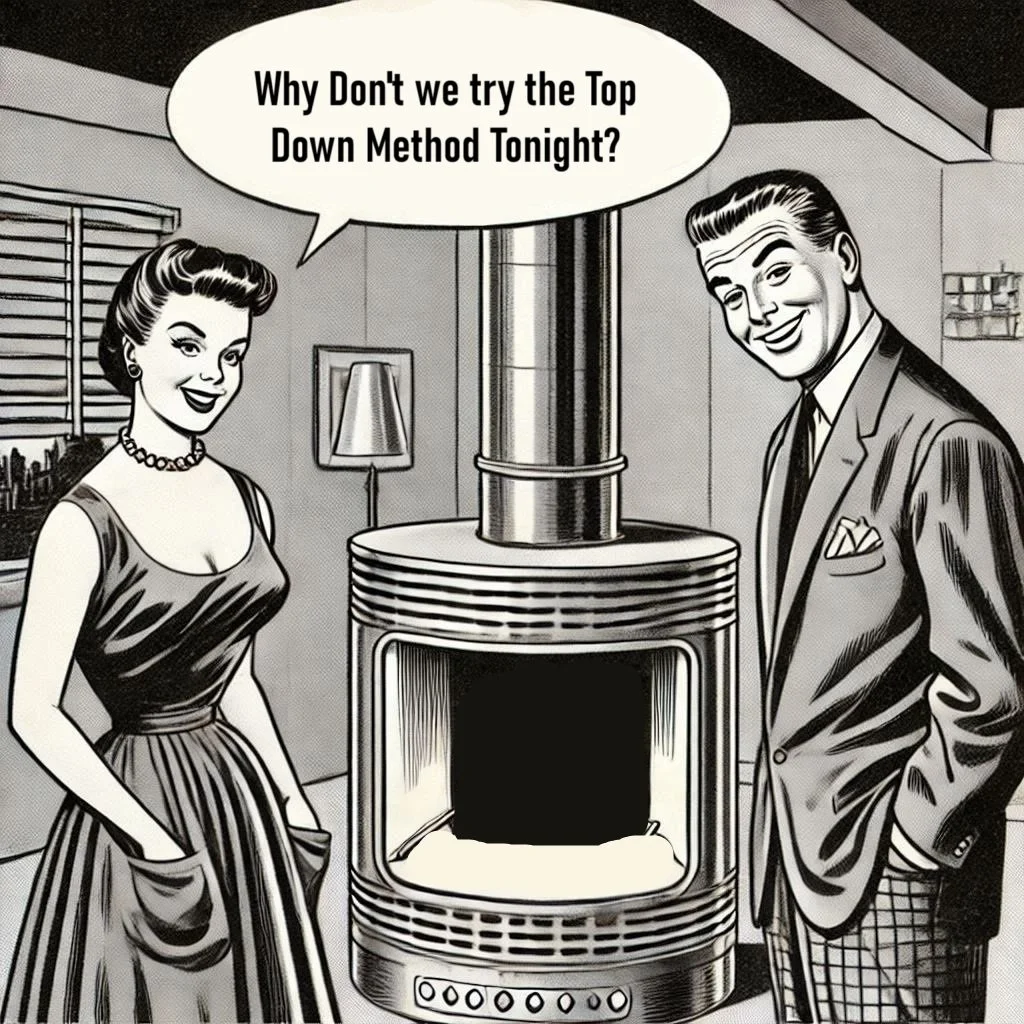
Anyone for Top Down?
Lighting a fire is an age-old skill, but not all methods are created equal. The top-down fire method, sometimes referred to as the "Swiss" or "reverse" fire, is a modern take on fire building that prioritises efficiency, cleanliness, and ease of use. Here’s how it works and why you should make the switch.
How to Build a Top-Down Fire
Materials Needed:
Large hardwood logs: Dry and seasoned, these serve as the primary fuel.
Kindling: Thin sticks / split wood.
Firelighters or paper: A small amount for ignition.
Step-by-Step Guide:
Prepare the Stove or Fireplace: Ensure the firebox is clean and free of ash. Check that the chimney or flue is open and clear for proper airflow.
Build the Base Layer: Place two or three large hardwood logs at the bottom of the firebox.
Top It Off with Kindling: Place a generous amount of kindling on the top. Thin, dry sticks or split wood work best for quick ignition.
Add Firelighters or Paper Position firelighters or crumpled newspaper among the kindling. Use just enough to ensure the top layer lights effectively.
Ignite the Fire: Light the firelighters or paper at the top. Close the door or leave it slightly ajar, depending on your stove or fireplace’s recommendations for airflow.
Once the fire is alight, allow the top layer to burn through and wait for the lower logs to catch properly before reducing the vents slightly. This ensures clean combustion and prevents the fire from stalling.
Once the fire is alight, begin adjusting the vents to achieve a steady, rolling flame. Too little air and the fire will smoulder and produce smoke; too much air and the logs will burn too fast and waste heat. Aim for a lively, consistent flame that’s not roaring or struggling.
Starting a fire using the top down method
Why the Top-Down Method Works
The top-down fire method is more than just a novel way to light a fire. Its design is rooted in principles of airflow and combustion efficiency:
Better Airflow By starting the fire at the top, the flames naturally draw air upward through the layers, ensuring consistent and even combustion.
Cleaner Burn Smoke and gases released from the lower layers are drawn through the flames above, effectively burning off particles that would otherwise contribute to soot and pollution.
Reduced Smoke on Ignition Traditional bottom-up fires often produce a lot of smoke during startup as the flames struggle to ignite damp or dense fuel. The top-down method eliminates this by burning dry, light materials first.
Longer Burn Times The larger logs at the base ignite gradually as the fire progresses downward, providing a steady and long-lasting source of heat.
Low Maintenance Once lit, a top-down fire requires minimal attention. There’s no need to rearrange logs or stoke the fire frequently.
Common Mistakes to Avoid
Using Wet Wood: Moisture prevents proper combustion and creates excessive smoke.
Overloading the Firebox: Too much wood can stifle airflow, causing the fire to burn inefficiently.
Blocking Airflow: Ensure the logs and kindling are arranged to allow air to circulate freely.
Conclusion
The top-down fire method is a simple yet effective way to enjoy a cleaner, more efficient fire. Whether you’re using a wood-burning stove or an open fireplace, this method reduces smoke, improves heat output, and takes the hassle out of maintaining your fire. Give it a try, and you’ll wonder why you ever lit a fire any other way!
